 Parkour techniques used in film “You want to move in such a way…as to help you gain the most ground on…something, whether escaping from it or chasing toward it.” Basic free running moves learnt: Dive Roll The dive roll is a basic technique for free running and parkour.
It is definitely a skill that requires training and practice. An improperly executed dive roll can result in injury and loss of cool points. The ideal parkour dive roll can break your fall; maintain momentum and link to other free running combinations. Start in a kneeling or squatting position and place both hands on the ground before you. You want to roll across your back diagonally, not from top to bottom. This will reduce stress on your spine and prevent injury. Rolling across the back diagonally, using your hands for stability, distributes the weight of your fall across a wider area.
Speed Vault Free running is all about the ease of movement and speed vaulting is probably the most widely recognized free running technique.

It is one of the most basic vaults you can perform. It’s called the speed vault because you don't lose momentum as you traverse obstacles and barriers. It’s performed by leaping over an obstacle like a track and field hurdler. The leap must come first and requires some guts to leap at an obstacle at full speed with confidence. Your legs are tucked beneath your body and slightly to the side. One arm is used for balance as you place a hand on the barrier. If you throw your legs out to the right, then your left hand is used for stability and vice versa.
Quadrupedal Movement Quadrupedal movement is an essential basic move for traceurs because it promotes balance and ease of movement.
 Quadrupedal movement mimics the locomotion of cats and other four legged animals, who are natural climbers and runners. Running on all fours will help maintain your momentum after large jumps. It can also help you traverse narrow rails and ledges. From a fitness perspective, quadrupedal movement works out your shoulders, arm and leg muscles. You'll find that running on all fours can be a valuable linking maneuver that transitions your body from a bipedal running position to more difficult vaults and flip positions.
Precision Jumps and Climb Ups Precision jumping and climbing are some of the most basic parkour and free-running movements.
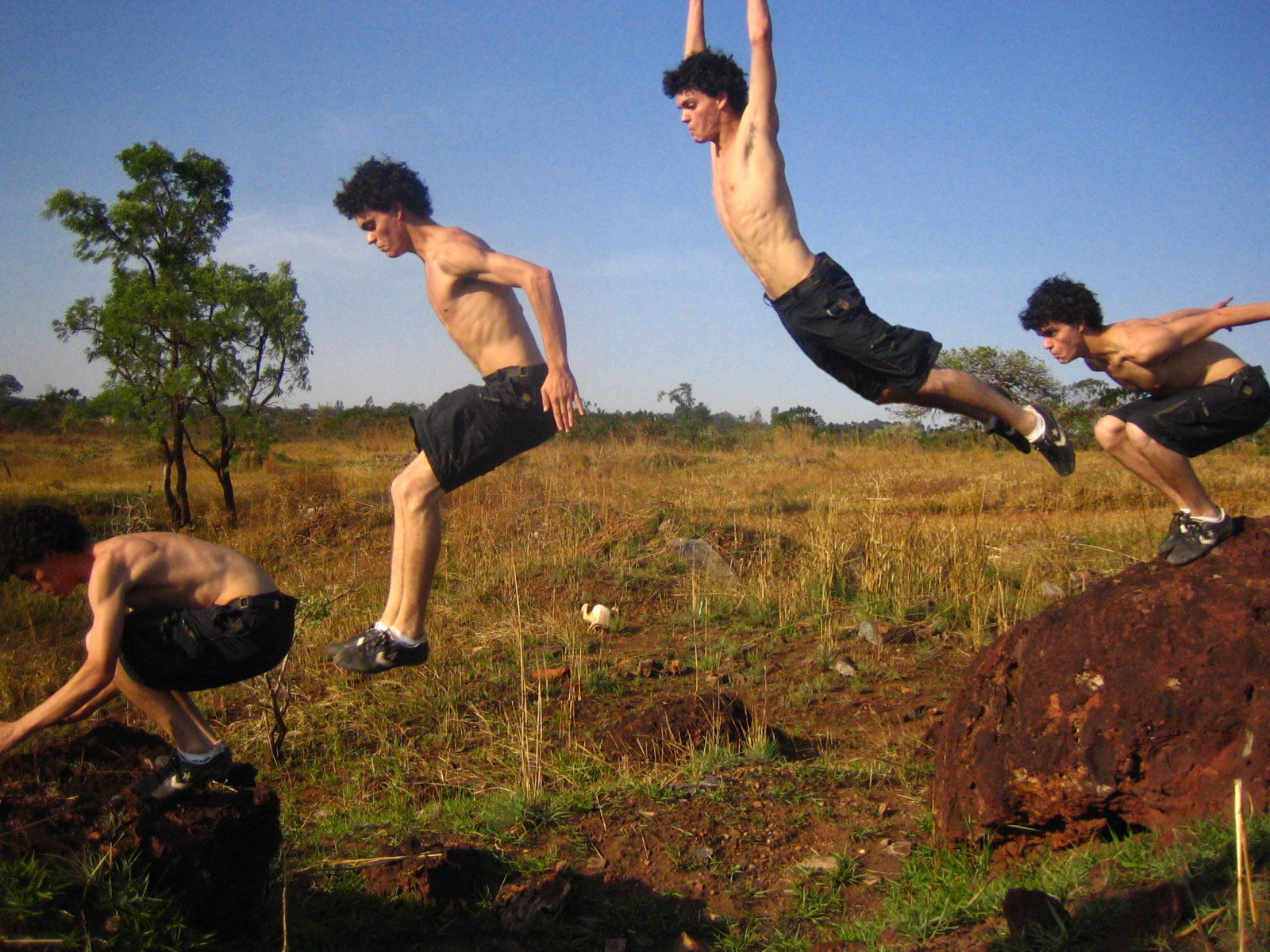 Practicing these fundamentals will make you a much better traceur . Precision jumping involves leaping to a point and stopping, ideal for heights and dangerous ground. For long distance precision jumps, you might feel compelled to perform a dive roll afterward to manage your momentum. A great technique to practice is the climb up. Your progression will go from scrambling up by any means necessary to a controlled climb up with one fluid motion. Leap to an overhang, gripping the edge with your hands. Use your feet to stop your momentum and give you added traction.


